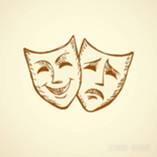
悲剧


In a way, if you like, at one end of the spectrum of sympathy, you've got the tabloid newspaper. At the other end of the spectrum, you've got tragedy and tragic art. And I suppose I'm arguing that we should learn a little bit about what's happening in tragic art. It would be insane to call Hamlet a loser. He is not a loser, though he has lost. And I think that is the message of tragedy to us, and why it's so very, very important, I think.
And I went to talk to them about certain of the great tragedies of Western art. I wanted to see how they would seize the bare bones of certain stories, if they came in as a news item at the news desk on a Saturday afternoon.
Tragic art, as it developed in the theaters of ancient Greece, in the fifth century B.C., was essentially an art form devoted to tracing how people fail, and also according them a level of sympathy, which ordinary life would not necessarily accord them. A few years ago, I was thinking about this, and I went to "The Sunday Sport," a tabloid newspaper I don't recommend you start reading if you're not familiar with it already.
The number one organ of ridicule, nowadays, is the newspaper. If you open the newspaper any day of the week, it's full of people who've messed up their lives. They've slept with the wrong person, taken the wrong substance, passed the wrong piece of legislation -- whatever it is, and then are fit for ridicule. In other words, they have failed. And they are described as "losers." Now, is there any alternative to this? I think the Western tradition shows us one glorious alternative, which is tragedy.


What is tragedy? tragedy is the conflict of good.

There are only two tragedies in life: one is not getting what one wants and the other is getting it.
